
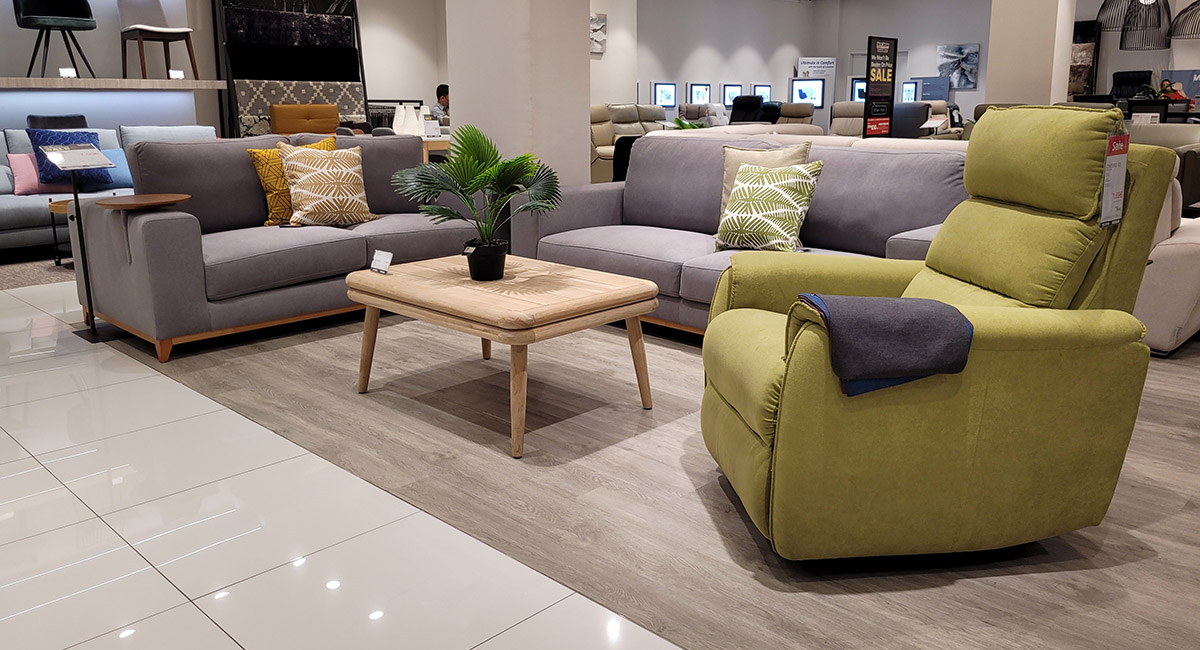
Donald Trump has made good on his threat to impose tariffs on furniture.
Effective Oct. 14, certain foreign-made furniture products, including couches, sofas and chairs, will be subject to a 25 per cent duty. That rate will increase to 30 per cent on Jan. 1, 2026.
The U.S. president signed a proclamation on Sept. 29, laying out his argument to impose the steep tax. Invoking Sec. 232 of the Trade Expansion Act of 1962 — widely considered an emergency power — it cites that upholstered wooden furniture is eroding the country’s national security.
Trump views the levies, a feature of his second term in office, as a way to pressure U.S. multinational companies to relocate furniture manufacturing capacity and jobs to America.
“In order to make North Carolina, which has completely lost its furniture business to China, and other Countries, GREAT again, I will be imposing substantial Tariffs on any Country that does not make its furniture in the United States,” said Trump on his Truth Social account.
There are some tariff exceptions based on agreements the U.S. has reached with certain trading partners. Furniture products from the United Kingdom will face a 10 per cent tariff, while such goods from Japan and the European Union will incur 15 per cent levies.
Vietnam, a growing supplier of furniture to the U.S., since Trump hit Chinese furniture products with tariffs in his first term, did not receive a reduced tariff rate despite reaching a trade deal with the United States in July.
The import duties will make it more challenging for companies to hold down furniture prices, meaning consumers will feel the brunt of the tariff impact. Industry executives have also expressed concern on the tariff effects due to the lack of manufacturing capacity in the U.S.
The latest executive order codifies Trump’s August announcement on his social media platform. In that post, he said that the U.S. would impose tariffs on imported furniture by mid-October, pending the outcome of an investigation by the Department of Commerce into foreign-made furniture products.
The action also comes about a month before the Supreme Court will rule on the legality of Trump’s use of Sec. 232 to impose sweeping tariffs on global trading partners, which two lower courts have struck down.
Foreign-made furniture isn’t the only item that has caught the ire of the current U.S. administration. Imported kitchen cabinets and bathroom vanities are also being slapped with a 25 per cent tariff, effective Oct. 14, which will increase to 50 per cent in the new year. Imported timber and lumber are facing a 10 per cent tax hike.
This newest round of tariffs is part of a continuing assault on the global wood industry. Trump says wood product imports threaten to close domestic wood mills and diminish utilization of the U.S. wood industry.
Canadian soft lumber producers already face U.S. anti-dumping and anti-subsidy tariffs of about 35 per cent. The additional 10 per cent duty will lift many shipments to about 45 per cent total at the border.
The Trump administration has said trading partners who negotiate with the United States to address the threat of wood imports to the country’s national security may be able to secure an alternative to the tariff increases.
Other sectors also newly targeted by Trump include patented pharmaceutical imports, heavy truck imports and films produced outside the U.S.