
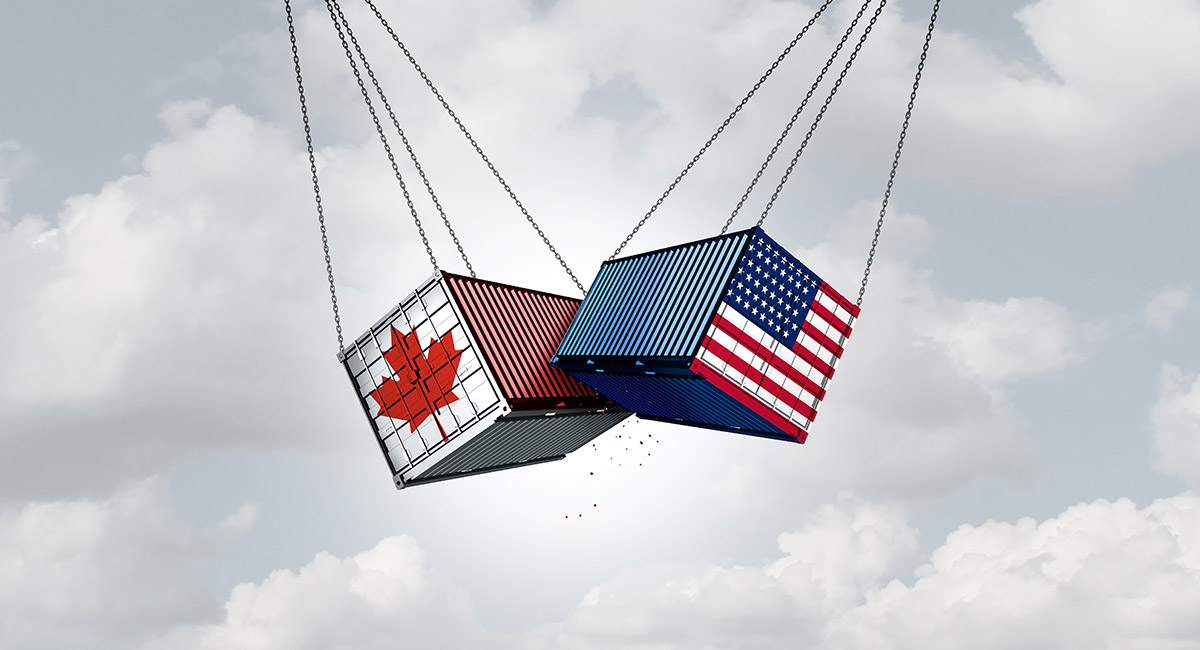
U.S. Tariff Plan Targets Small Businesses, Furniture
By Clare Tattersall & Tyler Holt
Canadian businesses can no longer ship small packages to the United States duty-free, which some say threatens their survival.
The end of the nearly century-old global tariff exemption that allowed goods worth less than $800 US to enter that country without extra fees took effect Aug. 29.
That means those shipments are now subject to a tax of up to 35 per cent, unless the goods meet Canada-United States-Mexico Agreement (CUSMA) requirements. To qualify, at least a certain percentage of the product must be made or substantially transformed in North America.
Even in those cases, businesses aren’t completely off the hook, as there are extra administrative costs for customs clearance.
The Canadian Federation of Independent Business (CFIB) reports that nearly one-third of exporters expect to be negatively affected by the change, resulting in higher costs, more paperwork and possible shipping delays.
The organization is advising businesses to review their product codes with a broker to determine which duties apply, as well as to communicate with their stateside customers so they aren’t surprised by added costs. Keeping a record of new fees, delays and lost sales is also recommended.
If goods are CUSMA-compliant, businesses should include the CUSMA origin declaration for duty-free treatment. It not compliant, U.S. duties and fees will apply, and couriers like Canada Post, FedEx and UPS will require proof they’ve been paid before delivery.
U.S. President Trump announced in July that he was pulling the plug on the de minimis rule.
His administration first suspended the exemption for shipments from China earlier this year.
A week prior to the end of the de minimis exemption, Trump announced the U.S. will impose new tariffs on imported furniture by mid-October, pending the outcome of a newly launched investigation into foreign-made furniture products.
The move, revealed via a Truth Social post on Aug. 22, signals an expansion of his administration’s protectionist trade agenda, aimed at revitalizing domestic manufacturing.
While no specific agency was named to lead the investigation, the directive indicates a continuation of prior trade strategies involving targeted tariff enforcement.
Trump’s announcement follows a series of escalating tariffs on countries like China and Vietnam — two of the largest exporters of furniture to the U.S., each sending more than $12 billion worth of furniture and fixtures annually, according to U.S. Department of Commerce figures.
Under CUSMA, Canadian-origin furniture may avoid these tariffs entirely, provided the goods meet the agreement’s rules of origin. Products classified under HS Code 9403, such as wood furniture, are exempt from duties if they undergo a tariff classification shift from their input materials; meet regional value content thresholds (more than 60 per cent by transaction value or more than 50 per cent by net cost); or qualify under the de minimis rule (less than 10 per cent non-originating content by value).
When these criteria are satisfied, the items are treated as “originating” and are eligible for duty-free entry into the U.S., assuming proper documentation is submitted.
While the U.S. government has not yet disclosed the target list or tariff rate, industry observers note that previous enforcement actions in the furniture sector have imposed duties as high as 35 per cent on non-originating goods.