
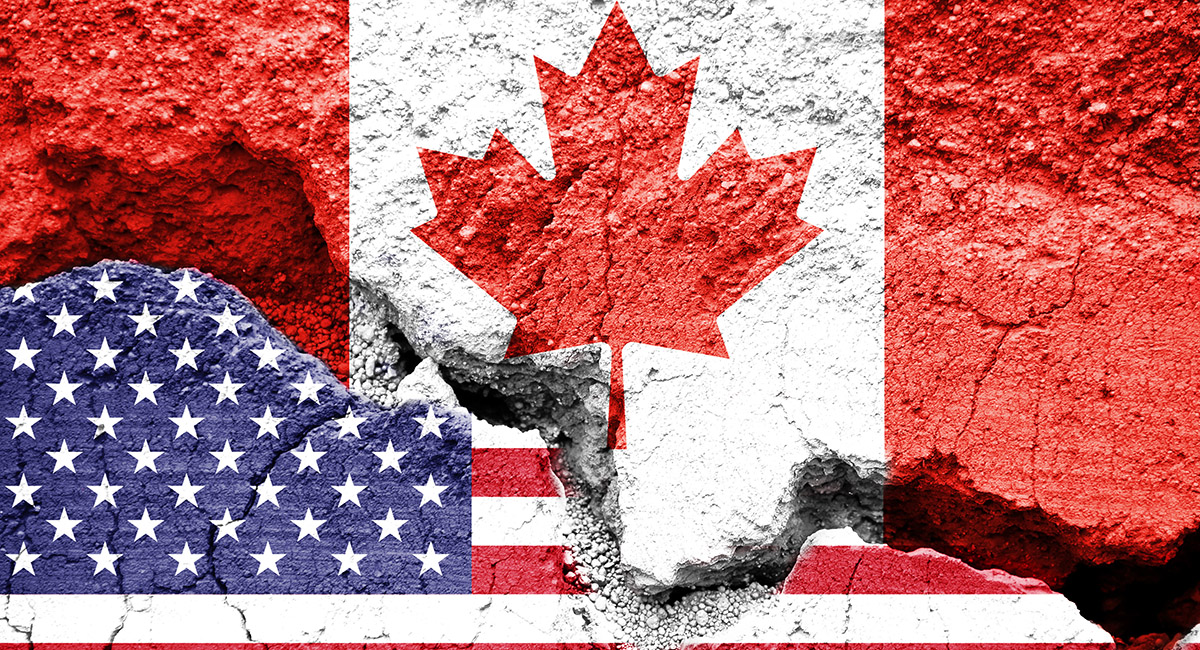
New U.S. tariffs, introduced after trade talks broke down between Canada and its southern neighbour, prompted the Canadian government to announce “dollar for dollar” counter levies. If implemented on Sept. 8, they will pile more pain on businesses already been affected by the additional 50 per cent tariff levied on Aug. 22, while also hitting other companies and consumers.
Canada’s Counter Tariffs
Canada will impose 15, 25 and 50 per cent tariffs on $27.6 billion of imports from the U.S., with individual product rates based on the corresponding U.S. rate for the same goods. The measures target sectors that are most affected by U.S. duties, such as household appliances — refrigerators, dishwashers, washing machines, stoves, ranges, and more — which are subject to a 25 per cent tariff rate.
Other home goods sector products affected and their tariff rate:
- Carpets and other textile floor coverings: 25 per cent
- Vinyl flooring: 50 per cent
- Lighting fixtures: 50 per cent
- Televisions: 50 per cent
- Wooden and metal furniture (beds, desks, dressers, nightstands, sofas, upholstered chairs, outdoor patio furniture): 25 to 50 per cent
Several other categories relevant to the Canadian home goods industry and their tariff rate include:
- Furniture fittings: 25 per cent
- Hinges: 25 per cent
- Plywood/veneered/laminated panels: 50 per cent
- Selected softwood lumber: 25 per cent
- Wood screws: 50 per cent
- Wooden furniture parts: 25 per cent
For Canadian manufacturers, these tariffs create both protection against competing U.S. products and new input-cost pressures.
U.S. Tariff Escalation
The new U.S. tariffs on a range of exports, including items that fully comply with the Canada-United States-Mexico Agreement, have broadened the trade pressures facing Canadian businesses. Among those affected, more than three-quarters anticipate their revenues will drop, according to the Canadian Federation of Independent Business. One in three expect revenues to fall by at least 50 per cent.
While the tariffs, grouped by three executive orders, mainly target motor vehicles, dairy and alcohol, they also apply to products outside those categories. Tariffs affecting the home goods sector include wooden furniture; down and feathers; chandeliers and lamps; seats, chairs and furniture parts made of wood, plastic and metal, with a range of specified uses and exemptions; refrigerating or freezing furniture and equipment; and paintings and drawings; among other items.
Housing Market Hurt
Erin Ruddy, editor of Canadian Apartment magazine, reports that the tariff war threatens to throw the timelines and costs of housing projects in Canada into disarray. Developers already grappling with labour shortages, high interest rates and soaring land costs now face a destabilizing force that could impact every aspect of the construction process.
According to Richard Lyall, president of the Residential Construction Council of Ontario, estimates had put the tariff-driven cost load on new Ontario homes at $15,000 to $25,000 per unit. With Canada’s counter tariffs, adding costs on appliances, electronics, pulp and paper, among other products, that number will be pushed even higher.
Future Uncertainty
Tyler Holt, editor of Wood Industry magazine, which focuses on the business side of woodworking, reports that the next major U.S. development could come after Oct. 1, when the commerce secretary is required to report to the president on hardwood timber and lumber imports, market conditions and the domestic industry. The deadline does not automatically trigger a tariff. However, the review could lead to additional Sec. 232 duties on hardwood timber and lumber.
For secondary wood manufacturers, Holts says the greater concern may be the explicit possibility of tariffs on hardwood “derivative products.” Depending on how broadly that term is ultimately defined, future measures could extend to additional furniture products.